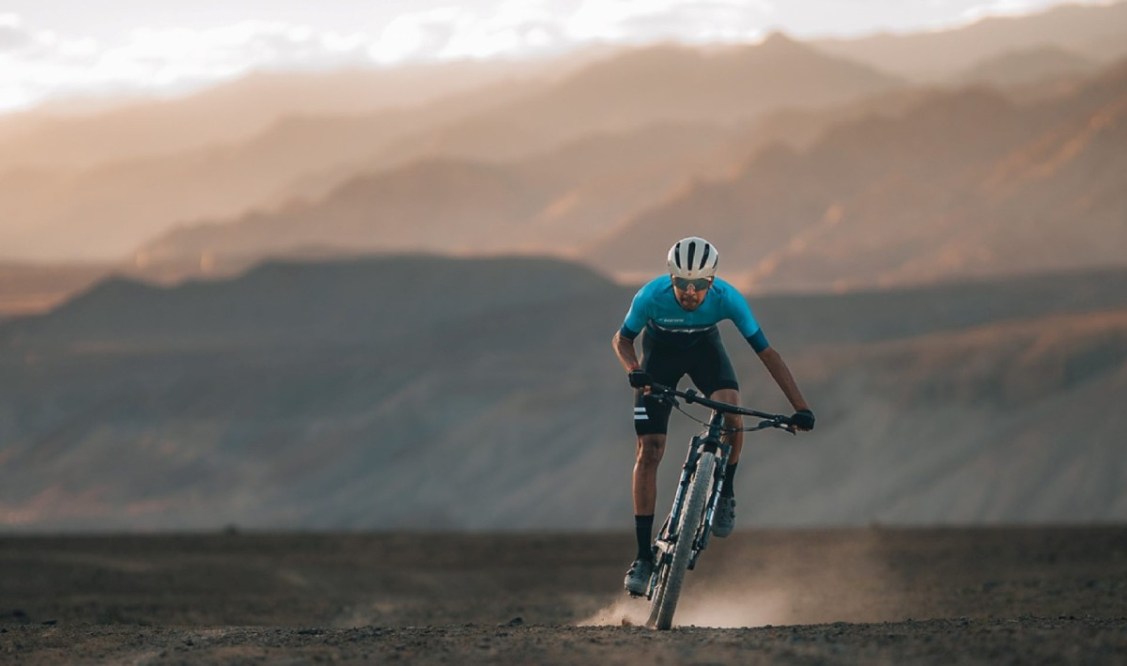
It was not so long ago that India was introduced to Mountain Biking, widely known as MTB championships. This sport evolved from a niche activity to a celebrated event in India’s sporting landscape.
While the roots of mountain biking can be traced back to the 1970s in California, India’s own MTB scene began to flourish in the early 2000s with events like the Hero MTB Himalaya, conducted in 2004. These events have played a pivotal role in igniting passion for the sport and marking India on the world map as a potential mountain biking destination. The sport has found fertile ground in several Indian states, including Himachal Pradesh, the Garhwal and Kumaon regions in Uttarakhand, and the Western Ghats, encompassing Maharashtra, Karnataka, and Kerala. Locations like Manali, Leh, and Spiti Valley have become synonymous with challenging yet satisfying MTB experiences as they offer an eclectic mix of landscapes, perfect for this adrenaline-pumping sport.
Over the past two decades, mountain cycling has grown from a fringe activity to a mainstream phenomenon, drawing enthusiasts from across the country and beyond. Among the states that stand out for this adventure sport, Himachal Pradesh takes the spotlight, boasting some of the most challenging yet rewarding trails and producing the finest mountain cyclists in the region. The state hosts several big-scale events, including the MTB Himalaya, which attracts top cyclists from around the globe.
However, local cyclists encounter various challenges. While the local riders from Himachal have the advantage of practicing through dense forests, rocky terrain, and treacherous mountain passes, which definitely enhances their performances, the lack of professional guidance, training modules, institutional support, and financial backing doubles their struggle to achieve world titles.

Shiven, a top-ranked Indian rider in the UCI MTB rankings with multiple National Champion titles, spoke about the beginning of mountain biking in India and the rise in the number of cyclists from Himachal Pradesh in the adventure sport. “Our community thrives on mutual support and shared experiences, which has driven the sport’s progress in India. Yet, the lack of government support poses significant challenges,” said Shiven, who is among the pioneers in this mountain cycling scenario in Himachal Pradesh.
Shiven has won a total of 11 National Championship medals, including four Gold, five Silver, and two Bronze medals. In 2022, he secured 2nd place at the Men Elite XCO MTB National Championships and was the National Champion in 2021 and 2020. He won the Men U-23 XCO MTB National Championship in 2020 and the Men Junior XCO MTB National Championship in 2014. He has participated in several international events as well as multi-stage events. His victories include winning the Bhakra Nangal Wheels and Strides, the Tour of Aravallis in 2018, the Scott MTB Mysuru in 2018, and the overall Scott XC Series in 2017-2018.
Shiven discovered his passion for mountain biking as a kid and has been cycling for over a decade now. Remembering his starting days, he shared that the internet was his first source of knowledge and that it was not very helpful for training purposes. “I only knew that it was a race and you had to ride. Slowly and gradually, when I started cycling and participated in international events, I got to know about the basics of training for the sport. Meeting cyclists from other countries gave me exposure.”
The Cycling Federation of India (CFI) is the sole recognized government body that regulates the sport in the country. It is affiliated with the Indian Olympic Association (IOA), the Asian Cycling Confederation (ACC), and the Union Cycliste Internationale (UCI). Every Indian state has one state-recognized body under CFI for executing all sporting activities.
At a commercial level, several private cycling events are being organized in India, attracting riders from national and international levels, but institutional-level guidance is certainly absent in mountain biking. In Himachal Pradesh, there is only one training center in Shillaru by the Sports Authority of India that only trains national medallists, leaving aspiring athletes to self-training and self-funding their initial years of training.
Another national medallist from Shimla, Kanishk Sharma, recalled that he first connected with the local cycling communities when he was introduced to the sport during the COVID-19 lockdown. “Mountain biking lacks structured training programs and institutions in India. Most training and coaching come from experienced athletes and personal endeavors. I benefited from the natural terrain of Himachal Pradesh,” said Kanishk Sharma.

Despite initial struggles, the 20-year-old mountain biker is dedicated to performing well in the upcoming Asian Championships and eventually world championships as well. However, he mentions that much of his equipment is on credit, and achieving national recognition has only helped him get his family’s support. Currently, he has no sponsorship and is surviving on self-funding.
Kanishk Sharma has achieved notable success in national and international mountain biking events from 2021 to 2024. He won 2nd place at the Himachal Pradesh Mountain Biking State Championships in 2021 and 1st place in 2021. He secured 3rd place at the 18th National Mountain Bike Cycling Championships in 2021 and 2nd place at the 19th National Championships in 2023. He finished 3rd at the 20th National Mountain Bike Cycling Championships in March 2024 and had the 2nd best time at the Himachal Pradesh MTB State selection trials the same month.
“Convincing my parents was a difficult task due to the high costs involved in this sport. As mountain biking is relatively new and less popular in India compared to other sports like cricket, media coverage and public recognition are limited, which affects the sport’s growth and the support athletes receive,” said Sharma.
As SSZee Media spoke to several cyclists from Himachal, it learned that riders face challenges posed by financial constraints and limited support from national sports bodies. Mountain biking is an expensive adventure sport that demands significant financial investment, which is a challenge for many athletes. But, amid all hurdles and challenges, riders from Himachal have contributed to the growth of mountain biking in India over the past decade.

Events like the Asian Mountain Biking Championship, held in 2023 in Kerala by CFI, have definitely pushed the progress of the sport. The COVID-19 pandemic particularly saw a surge in cycling in Himachal Pradesh, boosting the sport’s popularity. But, lack of financial aid and institutional guidance has made it challenging for newcomers.
Rohit Sharma, Executive Committee member of CFI and General Secretary of the Him Cycling Association, spoke about the growing interest in MTB and the key needs of athletes: “MTB thrives due to the natural terrain, attracting riders interested in adventure sports. Yet, basic training facilities and institutions are scarce. Unlike cricket, where training facilities are abundant, cycling lacks such structured development programs.”

“Himachal is in a sorry state from the government support standpoint despite the state’s success in national competitions and its ideal cycling terrain,” said Rohit Sharma adding “While some cyclists secure sponsorships for their equipment, many struggle without adequate financial backing.” Unlike few cyclists, not everyone is lucky enough to pursue the adventure sport mainly due to financial constraints and lack of government help.
Ashish Sherpa, another mountain cyclist from Shimla who has currently stopped cycling in national games due to financial constraints, said, “Unfortunately, there is no government support in Himachal for mountain biking. We have to cover all our expenses, even when we go for nationals. We have to take care of our travel expenses, food, and stay, unlike other states that provide funds and daily allowances to their athletes.”
Sherpa also started cycling without any formal training on a shared cycle with his elder brother. “My father used to guide me. We live in Shimla and here we have plenty of mountains and trails that we used for training. It wasn’t structured, but it worked,” said Sherpa. Sherpa’s cycling journey began with local Sunday rides in Shimla, where he also managed to get sponsorship, but that didn’t last long. He had to drop cycling for two years after winning a medal in the 2017 Nationals. “Honestly, I haven’t earned much from cycling. I had to work at a KTM motorbikes store to support myself and buy a new cycle when my sponsorship ended,” he said.

After that gap in 2018 and 2019, he returned to the Nationals in 2020 and 2022, winning gold in the under-23 category. Sherpa currently runs a restaurant and a motorbike garage in Shimla. Despite his love for the sport and dreams of representing India on a bigger platform, he finds it challenging to continue professionally due to the high costs and intense training required.
This cry for financial help is the major concern for every cyclist in Himachal. There has been a collective approach by the riders to the Himachal government for financial aid to improve their game but they have received none so far. Himachal Pradesh’s team was the overall winner in the men’s elite category, defeating the Army Adventure Wing for two consecutive years in 2021 and 2022. In 2023, the official account of the Chief Minister’s Office congratulated the cyclists and encouraged them to pursue the sport. However, the state government of Himachal Pradesh hasn’t approved the affiliation of Him Cycling, the sole state body affiliated with the National Sport Federation. Consequently, the riders face difficulties in obtaining financial aid due to the unclear functionalities of the state authorities in regulating the sport.
In India’s context, cycling is focused on three disciplines: Track Cycling, Road Cycling, and Mountain Biking, with the latter being relatively new and Himachal dominating in MTB championships. “It’s been a decade that MTB is being dominated by Himachal riders. We don’t do fairly well in road and track. We are almost absent in track events because we don’t have a velodrome in Himachal. Now, slowly and gradually, we are developing the velodromes,” said Rohit Sharma.
He added that riders from Himachal have shown little interest in track and road cycling. “In Himachal, people are more interested in adventure activities like MTB as Himachal is a hilly state and the terrain favors them for MTB. Road doesn’t make good sense to them because access to the road is a little difficult in certain areas,” said Rohit Sharma, highlighting concerns about basic training and guidelines. Unlike cricket, where there are multiple options for training and learning, mountain biking lacks basic training institutions or guidelines in our country. “Athletes need proper equipment, nutrition, coaching, and competitions to gauge performance and plan their training. We are working to improve these aspects systematically,” added Rohit Sharma.
Pointing out that cycling has no retirement policy, which becomes a big demotivation for riders to continue with the sport, Shiven said, “Currently, there are no government job options for retired athletes, making financial security a major concern.” Despite the challenges, MTB championships in India, especially in Himachal Pradesh, continue to attract passionate riders drawn to the thrill of adventure and the beauty of the sport. But addressing the challenges faced by cyclists is the need of the hour for the sustainability and growth of the sport.
The mountain biking community in Himachal is united by a shared passion to elevate the sport internationally, but it requires government support for financial security and resources. The adventure sport needs increased awareness and better support structures for cycling. With proper backing, Himachal Pradesh could become a mountain biking hub, producing world-class athletes due to its advantageous terrain and training conditions.
About Author




Leave a Reply