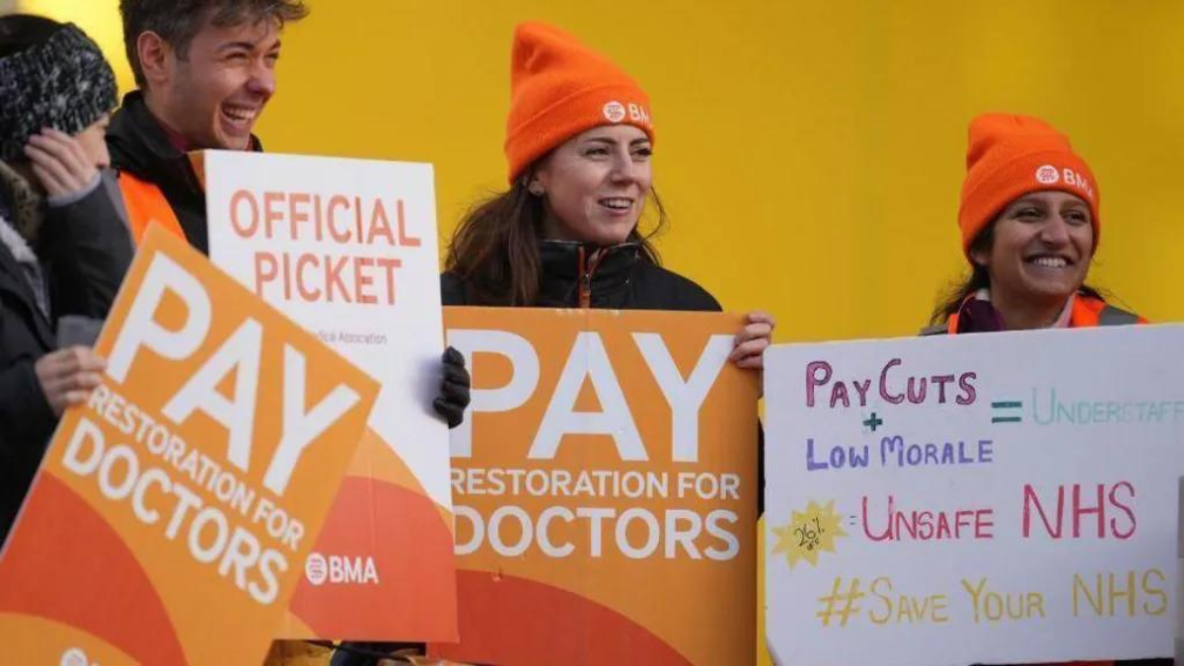
Junior doctors in England have agreed to a 22% pay rise over two years, concluding their protracted dispute with the government. The decision was backed by 66% of the British Medical Association (BMA) members, with nearly 46,000 participating in the online vote.
This settlement brings an end to an 18-month standoff that saw junior doctors engage in 11 separate strikes. However, the BMA has cautioned that it expects further above-inflation pay increases in the future, warning that failure to meet these expectations could lead to “consequences.”
The new agreement will see the starting salary for junior doctors rise from £29,384 in 2022-23 to £36,616 annually in basic pay. Senior junior doctors, on the other hand, could now earn more than £70,000. On top of this, most junior doctors typically receive an additional 25% to 30% for extra shifts and unsocial hours.
The offer, made by Health Secretary Wes Streeting in July shortly after Labour’s election win, was a breakthrough in what he described as “the most devastating dispute in the health service’s history.”
“I’m pleased it has been accepted,” Streeting said. “This marks the necessary first step in our mission to cut waiting lists, reform the broken health service, and make it fit for the future,” he added.
The deal includes a 4% backdated pay increase for 2023-24, supplementing a previous pay rise that averaged 9% for the last financial year. An additional 8% increase is set for 2024-25, as recommended by an independent pay review body. Over the two-year period, junior doctors are set to receive an average 22% pay boost, with the largest increases going to the lowest-paid.
The BMA initially pushed for a 35% pay rise, arguing that junior doctors had faced years of pay stagnation below inflation.
About Author





Leave a Reply