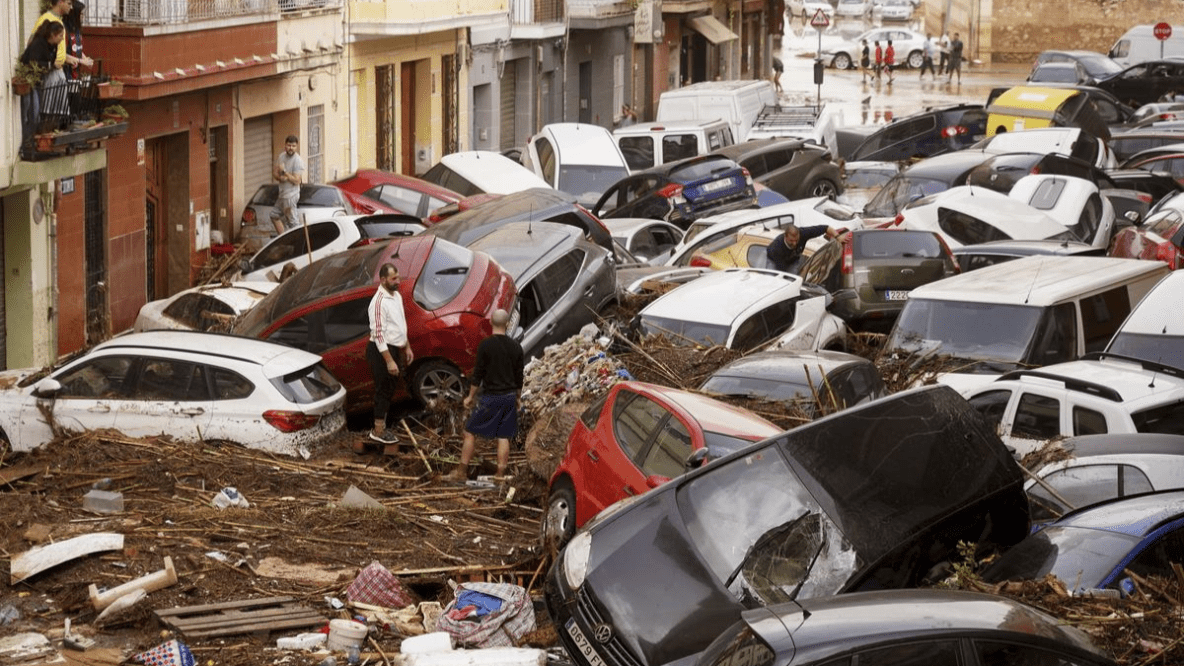
Spain’s Valencia region is bracing for further military assistance as the death toll from catastrophic floods rises. According to BBC report, an additional 500 soldiers are set to join the 1,700 troops already engaged in search and rescue efforts, following widespread criticism of local authorities’ handling of the crisis.
The devastating floods, triggered by relentless downpours since Monday, have left over 200 people dead—most in the Valencia area—and the toll is expected to climb, reported BBC. The torrential rain has obliterated infrastructure, submerging entire towns in mud and isolating communities without essential supplies.
Thousands of volunteers from Valencia city have mobilized to deliver aid and help clear debris, but regional officials announced restricted traffic over the weekend to prioritize emergency access. This move, effective from midnight on Saturday until 23:59 on Sunday, aims to streamline the distribution of water, energy, and food while facilitating emergency operations.
Authorities, alongside military units, have been focusing on extracting water from underground spaces like car parks and tunnels, where it is feared individuals were trapped as floodwaters surged. Despite the ongoing operations, hopes of finding survivors are diminishing.
The response effort has drawn heavy criticism for its perceived sluggishness. Amparo Andres, who has managed her shop in Valencia for four decades, described her harrowing ordeal to the BBC, said, “At least I’m alive, but I’ve lost everything. My business, my home. And the government isn’t doing anything. Only the young people around are helping us.”
Local and national authorities are facing accusations of delayed action. An emergency alert was only sent to mobile phones in the Valencia area late Tuesday evening, by which point flooding had already caused extensive damage. Juan González, a resident of Aldaia, expressed frustration over the apparent lack of preparedness. “It’s outrageous that our local government didn’t do anything about it, knowing that this was coming,” he said.
The federal government in Madrid, led by Prime Minister Pedro Sanchez, has also come under fire for not deploying the army sooner and for initially declining France’s offer of 200 firefighters. Sanchez has since pledged full support for those affected, promising to allocate all necessary resources.
Meanwhile, volunteer-driven clean-up efforts—spearheaded by youth groups via social media—have brought hundreds to the hardest-hit neighborhoods, underlining the community’s resilience amid slow-moving governmental aid.
The calamity extends beyond Valencia, with areas in southern Spain, including Huelva and Cartaya, also reporting severe damage. In Jerez, hundreds of families were evacuated as the deluge intensified. Meteorologists have noted that drought-stricken terrain in the east and south of Spain contributed to the floods’ severity, as the parched ground failed to absorb rain effectively.
In one stark example, the town of Chiva experienced a year’s worth of rainfall within just eight hours on Tuesday, as reported by Aemet, the national meteorological agency. Experts link the unprecedented flooding to climate change. A preliminary report by World Weather Attribution (WWA) suggested that the rainfall was 12% heavier due to global warming, making such extreme events twice as likely.
About Author




Leave a Reply