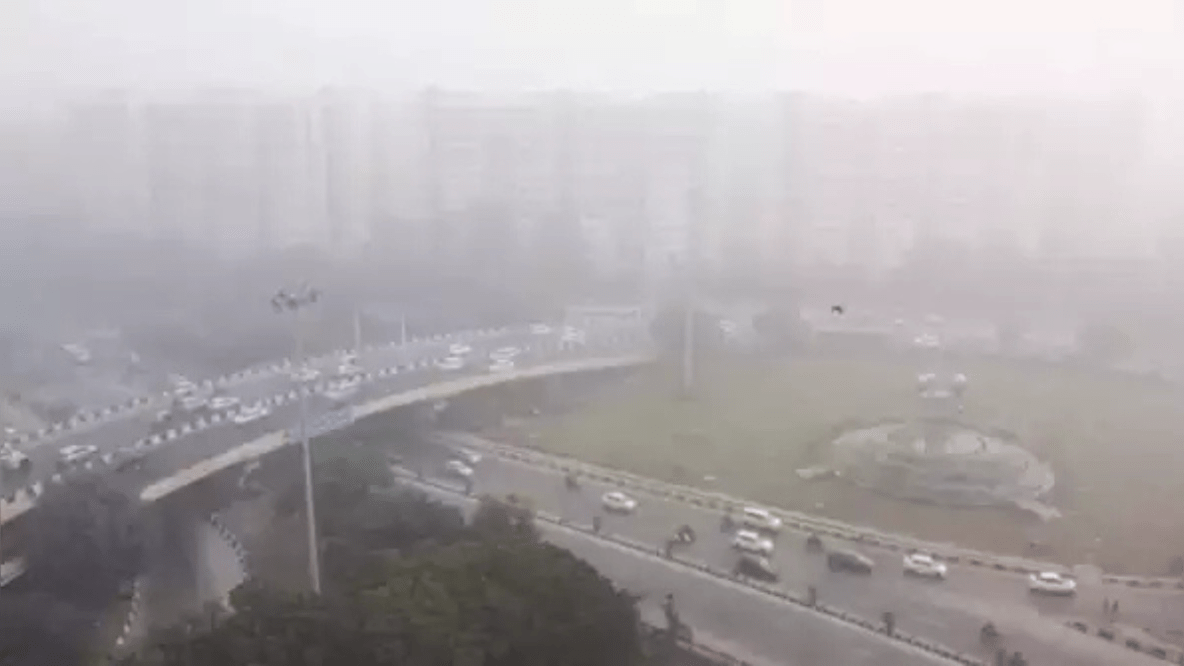
Delhi’s air quality remains in the “severe” category, marking the third consecutive day that the city has been shrouded in thick smog. With an Air Quality Index (AQI) of 498, Delhi ranks as the world’s second most polluted city, surpassed only by Lahore, Pakistan, where AQI levels reached 770 at 7 a.m. The rankings, compiled by Swiss air quality technology company IQAir, are based on Particulate Matter 2.5 (PM2.5) data, a harmful air pollutant.
According to data from the Central Pollution Control Board’s Sameer app, Delhi’s most affected neighborhoods include Jahangirpuri (AQI 458), Bawana (455), Wazirpur (455), Rohini (452), and Punjabi Bagh (443). Visibility remains low, with Palam and Safdarjung areas reporting 500 meters and 400 meters visibility, respectively.
Transport Disruptions and Public Health Concerns
The dense smog has severely impacted transportation, disrupting both flight and rail services across northern India. IndiGo flights to and from Amritsar and SpiceJet services connecting Delhi and Darbhanga faced delays. Over 25 trains were delayed upon arrival at New Delhi Railway Station, with several others running over two hours behind schedule.
Responding to the critical pollution levels, Delhi’s Chief Minister Atishi announced that all primary schools would shift to online classes until further notice. “The online classes for primary school children will continue until further directions,” she shared on X.
Stricter Measures Under GRAP Stage 3
On Thursday, the Commission for Air Quality Management (CAQM) activated Stage 3 of the Graded Action Response Plan (GRAP), intensifying restrictions across the National Capital Region. The measures include:
- Halting non-essential construction and demolition activities.
- Banning BS-III petrol and BS-IV diesel vehicles in Delhi and surrounding NCR cities like Gurugram, Faridabad, Ghaziabad, and Noida.
- Limiting the use of diesel generators to emergency situations.
- Enforcing stricter regulations on industrial operations using non-approved fuels.
- Increasing public transportation options and encouraging off-peak travel.
Health Warnings as Pollution Takes a Toll
Long-term exposure to severe pollution poses health risks even for healthy individuals, while those with pre-existing conditions are especially vulnerable. Doctors have advised residents to minimize outdoor activities, particularly in early mornings and evenings when pollution is highest.
Dr. Sukrit Singh Sethi, Consultant in Gastroenterology, Hepatology & Liver Transplantation at Narayana Hospital in Gurugram, explained the consequences of prolonged exposure. “The harmful particles and gases in polluted air, when inhaled, can lead to systemic inflammation and oxidative stress, which disturb gut health and impact the microbiome,” he told IANS.
Residents are advised to wear masks outdoors, reduce outdoor activities, and take extra precautions to minimize the health impact of the escalating pollution crisis in the city.
About Author





Leave a Reply