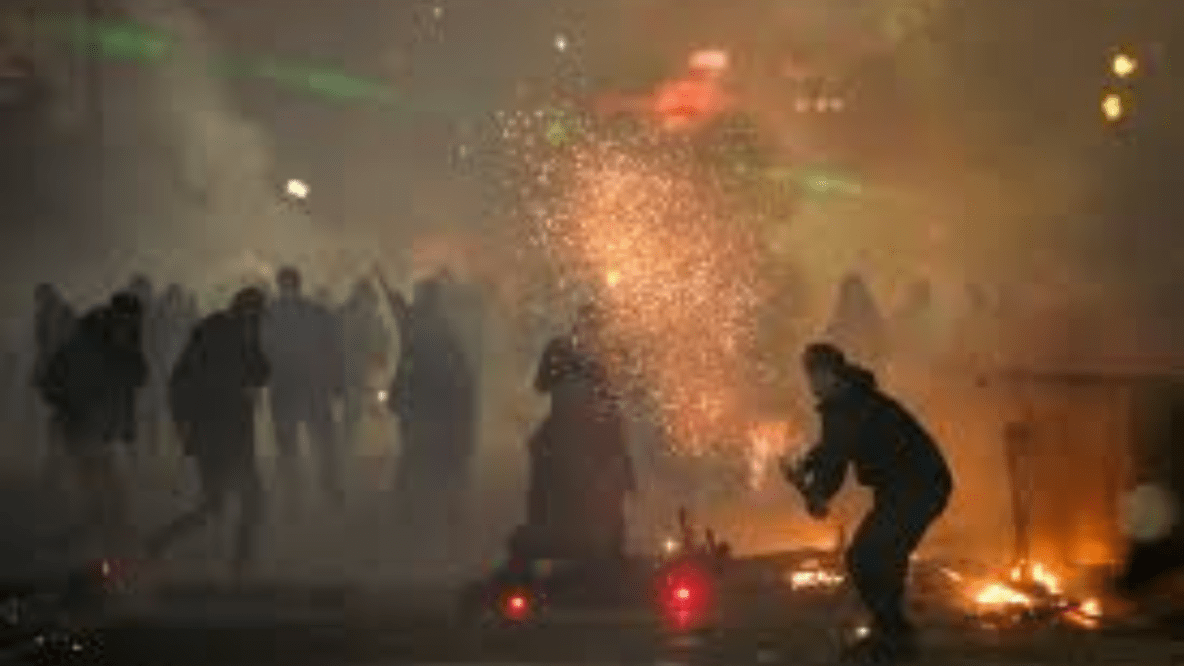
Protests in Georgia’s capital, Tbilisi, have entered their fifth night, with clashes between demonstrators and riot police intensifying. The unrest follows the ruling Georgian Dream party’s decision to suspend talks on European Union membership, a move critics see as a pivot toward Russian influence.
According to Reuters report, President Salome Zourabichvili, at odds with her government, has urged Western nations to back a “national movement” advocating for Georgia’s EU integration. Calling for strong support. She told Reuters, “There is no other political recipe” to resolve the crisis. She also appealed for European countries to reject the October election results that granted Georgian Dream 54% of the vote, citing allegations of fraud denied by the ruling party and the electoral commission.
Tensions escalated as thousands of demonstrators gathered outside parliament, prompting police to deploy water cannons against protesters throwing fireworks. The Interior Ministry reported that over 200 people have been detained since the protests began, with injuries on both sides. Public outcry includes accusations of excessive police force, with Georgia’s public ombudsman noting that 124 of 156 detainees reported violence by authorities.
The international community has expressed alarm, with the United States condemning police actions and Lithuania, along with Baltic allies, imposing entry bans on Georgian Dream backer Bidzina Ivanishvili and 10 Georgian officials for alleged human rights abuses.
The government has refused dialogue with opposition leaders, whom Prime Minister Irakli Kobakhidze accused of inciting “coordinated violence” to undermine constitutional order. Meanwhile, Kremlin spokesperson Dmitry Peskov denied Russian involvement, though former Russian President Dmitry Medvedev ominously warned Georgia is “moving rapidly along the Ukrainian path.”
In contrast, Zourabichvili dismissed comparisons to revolutionary uprisings, emphasizing the need for unity. She praised officials resigning in protest, including ambassadors and a high-ranking interior ministry instructor, describing their actions as “very courageous.”
The protests have drawn widespread attention, with figures like Georgian MMA fighter Ilia Topuria adding to the chorus of dissent. “I am ashamed to see how the children of Georgia are treated. This is not called freedom,” Topuria wrote on Instagram.
As the unrest continues, the EU, the US, and Russia remain closely engaged, watching the developments in this strategically significant South Caucasus nation.
About Author



Leave a Reply