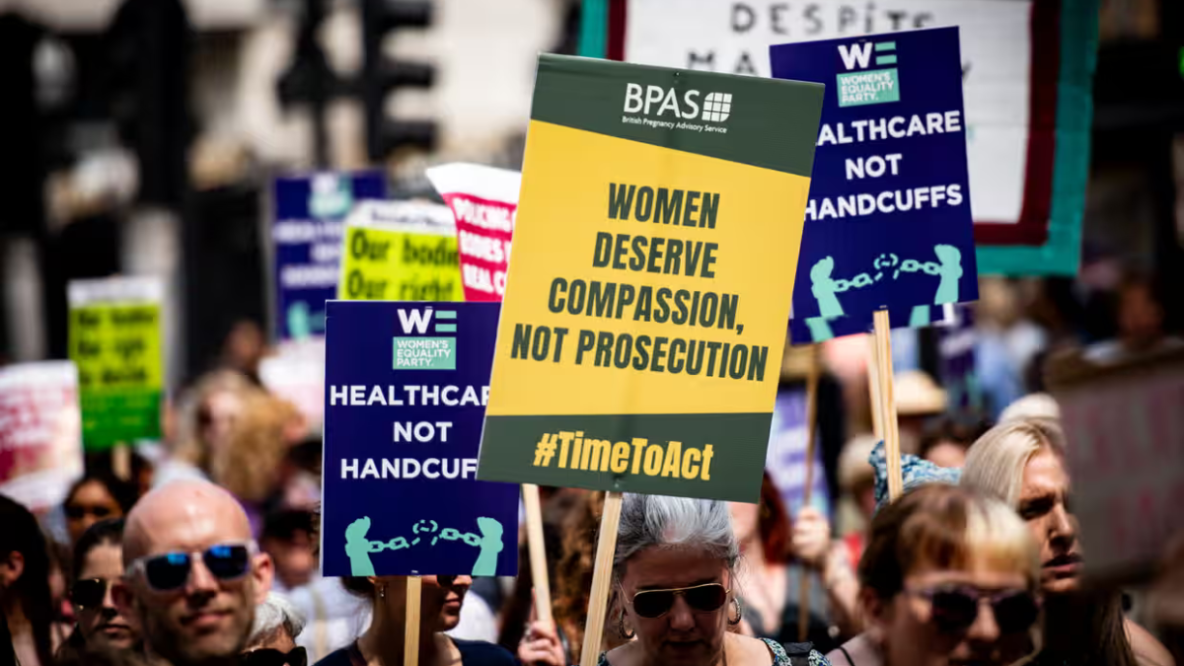
The sentencing of a young couple, Sophie Harvey and Elliot Benham, for actions following the stillbirth of their baby has reignited debates over abortion laws in England. The case, which concluded at Gloucester Crown Court more than six years after the events, has drawn sharp criticism of the country’s outdated legislation governing reproductive rights.
Harvey and Benham, both 25, were teenagers when the ordeal began. At 19, they sought an abortion for an unplanned pregnancy but were informed Harvey was past the legal gestation limit of 24 weeks. At the time, Harvey was estimated to be nearly 29 weeks pregnant. With no legal options available, the couple turned to the internet for alternatives.
Prosecutors revealed that Benham ordered illegal abortion drugs online, although the couple maintained that Harvey never consumed them and the baby was stillborn before the tablets arrived. The two were charged with conspiracy to procure a poison with intent to procure a miscarriage and concealing the birth of a child.
Judge Lawrie acknowledged the prolonged distress caused by the legal proceedings, stating, “It has been a long and painful journey. The impact upon your lives has been traumatic and I am sure this will continue for some time.”
The case has intensified discussions around England’s abortion laws, which are based on the 1861 Offences Against the Person Act. Although the 1967 Abortion Act allows terminations under specific conditions, the framework still criminalises abortion, carrying a maximum penalty of life imprisonment.
Critics argue that these laws are outdated and harmful. Louise McCudden, UK head of external affairs at MSI Reproductive Choices, remarked, “These Victorian laws have been on the statute books for a century and a half – and have real consequences today. The young woman at the centre of this distressing story needed compassion and advice she could trust, not criminal prosecution and public shaming.”
Heidi Stewart, CEO of the British Pregnancy Advisory Service, echoed these sentiments, adding, “Instead of compassion and support, this young woman has been met with stigma, shame, and a protracted legal process that has disrupted her life for years.”
Advocates like Labour MP Stella Creasy are calling for legislative reform to decriminalise abortion entirely. “It’s time to decriminalise abortion and recognise this is a healthcare matter,” Creasy stated.
With the new Labour government’s crime and policing bill expected to be introduced in early 2024, campaigners see a fresh opportunity for reform. However, the government insists that any changes to abortion law remain a matter of conscience for individual MPs.
Public figures and organisations are using this case to underline the urgency for change, with many urging a more compassionate and healthcare-oriented approach. Dr. Jonathan Lord, from the British Society of Abortion Care Providers, labelled the current system a “national scandal,” citing the harm it causes to vulnerable women and girls.
About Author





Leave a Reply