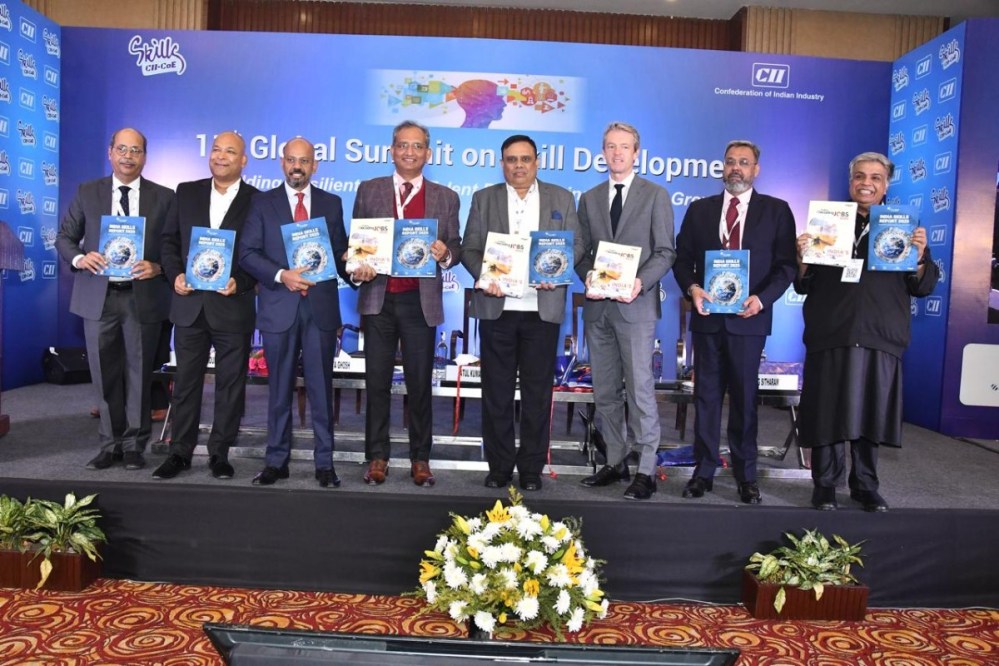
India’s position as a global hub for skilled talent is cementing further, with a 7% increase in employability among its graduates, as revealed in the Wheebox ETS India Skills Report 2025. Employability now stands at 54.81% for 2025, a significant rise from last year’s 51.25%. This growth, combined with 65% of the workforce being under 35 years old, positions India as a key player in meeting the workforce demands of regions such as the Gulf Nations, Southeast Asia, Europe, and Africa.
The report, released in collaboration with CII, Taggd, AICTE, and AIU, focuses on “Global Talent Mobility” and outlines India’s strategic roadmap to address global workforce requirements. Skilled professionals from India, particularly in technology, healthcare, renewable energy, and artificial intelligence, are driving global economic growth and innovation.
Nirmal Singh, Chief Convenor of the India Skills Report and CEO of Wheebox, emphasized India’s unique advantage in global talent mobility. “This decade belongs to India as a leader in global talent mobility. This decade must be focused on quality of skills training that shall make a stark difference for international mobility. Long term and internally certified skill programs with embedded language training will be the winning bet to provide early work opportunities. The skilled and certified talent from India provides a unique advantage and leverage to India. Our workforce is bridging skill gaps worldwide, creating transformative opportunities in a rapidly evolving global economy.”
The report highlights a growing hiring intent among organizations across industries such as technology, manufacturing, healthcare, and e-commerce. The India Hiring Intent Survey 2025, conducted with over 1,000 corporations from 15 industries, reflects optimism, especially for entry-level roles. Maharashtra, Karnataka, and Delhi lead as key states, while cities like Pune, Bengaluru, and Mumbai emerge as significant talent hubs.
The 7% rise in employability is credited to initiatives by the Central and State Governments, reforms like the Skill India Mission and NEP 2020, and the efforts of institutions such as AICTE, UGC, and AIU. With half of secondary and tertiary students expected to receive vocational training by 2025, the country is aligning its workforce with industry needs.
“This increase in employability is not just a statistic—it’s a testament to India’s ability to adapt, innovate, and thrive in an interconnected world. Governments have to initiate a large scale internationally acceptable and certified skilling and employment initiative for the world,” Singh added.
The report also outlines a clear roadmap for preparing India’s workforce for global demands. This includes expanding access to vocational training in high-demand areas like artificial intelligence, cybersecurity, and green energy; fostering international partnerships with countries facing aging populations and skill shortages; leveraging technology such as AI in education and assessments; and promoting diversity, with women now comprising 47.53% of the employable talent pool.
As India builds on its strengths, it is poised to become an indispensable player in the global talent ecosystem, with its workforce shaping the future of industries worldwide.
About Author





Leave a Reply