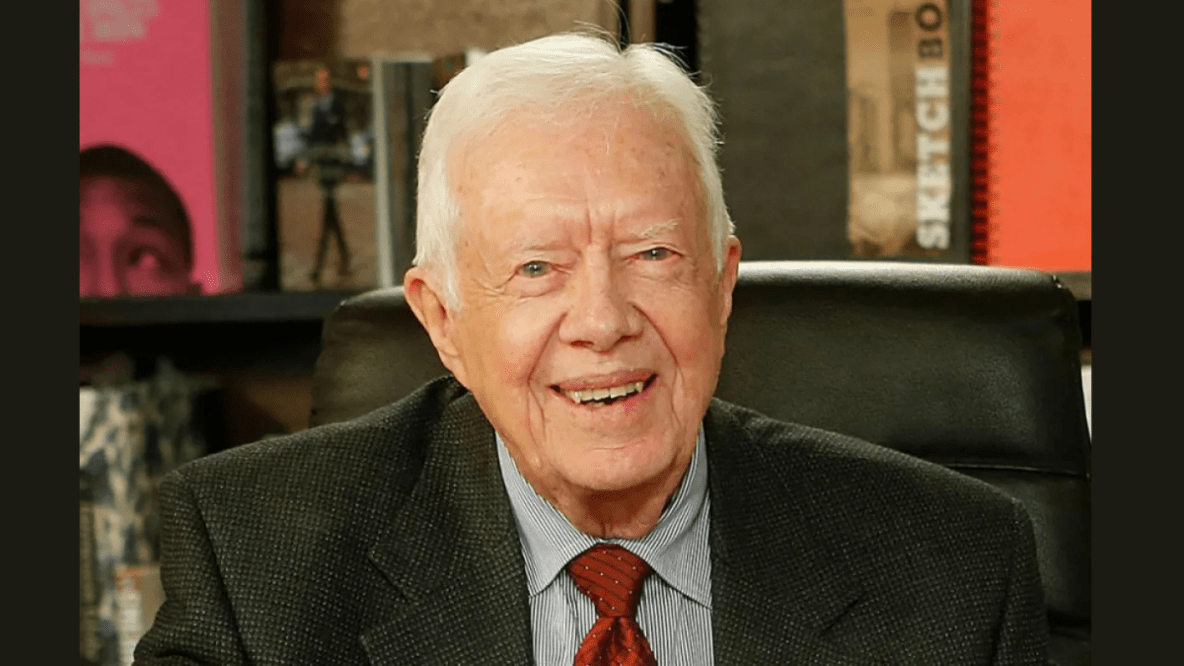
Jimmy Carter, the 39th President of the United States and a renowned figure in global humanitarian efforts, passed away on Sunday at the age of 100. Known for his relentless advocacy for peace and human rights, Carter’s influence extended far beyond his one-term presidency from 1977 to 1981, earning him the Nobel Peace Prize in 2002 for his international conflict resolution efforts.
Carter had entered hospice care in 2023 after enduring a series of health challenges, including metastatic brain cancer and liver cancer, as well as brain surgery following a fall in 2019. Despite these struggles, he made a poignant appearance at the memorial service for his wife, Rosalynn Carter, in late 2023.
Chip Carter, his son, paid tribute in a heartfelt statement, said, “My father was a hero, not only to me but to everyone who believes in peace, human rights, and unselfish love. The world is our family because of the way he brought people together.”
The former president gained popularity for his humble beginnings as a peanut farmer in Plains, Georgia, to his ascension as a Washington outsider with a campaign emphasizing honesty and integrity after the Watergate scandal. His inauguration set a tone of accessibility, with Carter famously walking down Pennsylvania Avenue alongside Rosalynn instead of taking a limousine.
Though his presidency faced significant challenges, from the Iran hostage crisis to high inflation, Carter’s vision for energy conservation and international diplomacy laid groundwork for later successes. His historic role in brokering the Camp David Accords between Israel and Egypt became a cornerstone of his legacy.
Carter’s post-presidency years were marked by tireless efforts as a peace negotiator and humanitarian. From monitoring elections to combating disease in sub-Saharan Africa, his work brought hope and change to millions. President Joe Biden described Carter as “an extraordinary leader, statesman, and humanitarian” in a statement, while former President Barack Obama reflected on his remarkable contributions to peace and justice. Vice President Kamala Harris praised Carter’s life as a source of inspiration for generations to come.
Carter’s later years also saw him speaking boldly on global issues, including the Israeli-Palestinian conflict, earning both admiration and criticism. His 2007 book, Palestine: Peace Not Apartheid, was a testament to his unwavering commitment to dialogue and justice, a theme further explored in Jonathan Demme’s documentary Jimmy Carter: Man From Plains.
Born in Plains, Georgia, as James Earl Carter Jr., he served in the Navy before turning to state politics in the 1960s. Elected governor of Georgia in 1970, Carter became a symbol of the South’s shift toward racial progressiveness. His 1976 presidential campaign, which highlighted his authenticity and moral leadership, resonated deeply with a nation seeking renewal.
About Author





Leave a Reply