A leaked UK Home Office report has brought “Hindu nationalist extremism” under scrutiny, linking it to the 2022 Leicester riots and suggesting it be included in Britain’s counter-extremism strategy for the first time. The findings, published by the right-wing think tank Policy Exchange, have ignited a political debate, with the UK government quickly distancing itself from the document.
The review reportedly called for expanding counter-extremism efforts beyond traditional threats like Islamist and far-right extremism, urging authorities to focus on “behaviours and activity of concern” rather than specific ideologies. It also identified Hindutva (Hindu nationalism), extreme misogyny, and a fascination with violence as areas of concern. However, Home Secretary Yvette Cooper has rejected these recommendations. Speaking in Parliament, Security Minister Dan Jarvis clarified that the leaked review does not reflect government policy. “Many documents produced across Government as part of commissioned work are not implemented and do not constitute government policy,” Jarvis told MPs. “To be clear, the leaked documents were not current or new government policy.”
Despite this, the report marks a significant shift, as it is the first time an official UK government document has attributed part of the Leicester riots’ unrest to Hindu nationalism. The 2022 riots saw violent clashes between Hindus and Muslims in the city after a group of nearly 200 masked Hindu men marched through the Highfield area chanting “Jai Shri Ram,” a phrase increasingly associated with anti-Muslim violence in India. The unrest escalated as Muslim groups took to the streets in response.
The report notes that “key voices within both Muslim and Hindu communities also played a significant role in opportunistically exploiting tensions and inciting hate among the local communities.” Leicester’s mayor, Sir Peter Soulsby, previously pointed to “ideologies that have their roots in the Indian subcontinent” as a factor in the violence, specifically confirming that he was referring to Hindutva. At the time, then-MP Claudia Webbe had warned, “We have fringe elements led and inspired by extremism and right-wing ideology rearing its head in the UK and in the peaceful city of Leicester.”
The debate over the role of Hindutva in the UK has been ongoing, with some pointing to links between Leicester’s unrest and India’s ruling Bharatiya Janata Party (BJP). A Daily Mail report in 2023 cited unnamed security sources alleging that activists connected to the BJP had played a role in stoking tensions.
Rajiv Sinha, director of Hindus for Human Rights UK, welcomed the leaked report’s findings. “As Brits of Indian descent, and in my case as a proud Hindu, we hope this revelation from the leaked report supplies further grounds and inclination to tackle Hindu nationalism, which in its many forms poses a great threat to the stability of the United Kingdom,” he said.
The report has also sparked reactions from policy groups. The Community Policy Forum (CPF), a think tank focused on structural inequalities affecting British Muslims, called it “a crucial and positive step forward,” criticizing past political reluctance to address Hindutva’s role in the Leicester unrest. “Until now, politicians have been largely unwilling to fully acknowledge the role of Hindutva ideologies in the unrest we saw in Leicester in 2022. Failing to recognise its influence severely hinders efforts to understand and address divisions within communities,” the CPF stated.
The CPF also highlighted its upcoming report, co-authored with the United Kingdom Indian Muslim Council, which examines Hindutva’s role in “exacerbating communal tensions” in Leicester. The organization dismissed the government’s independent review of the riots, led by Lord Ian Austin, as lacking credibility. More than 100 Leicester-based Muslim organizations previously refused to engage with Austin’s review, citing concerns over his past remarks on pro-Palestine groups. The CPF argued that Austin’s report was “unfit for purpose” and called for a new, impartial investigation.
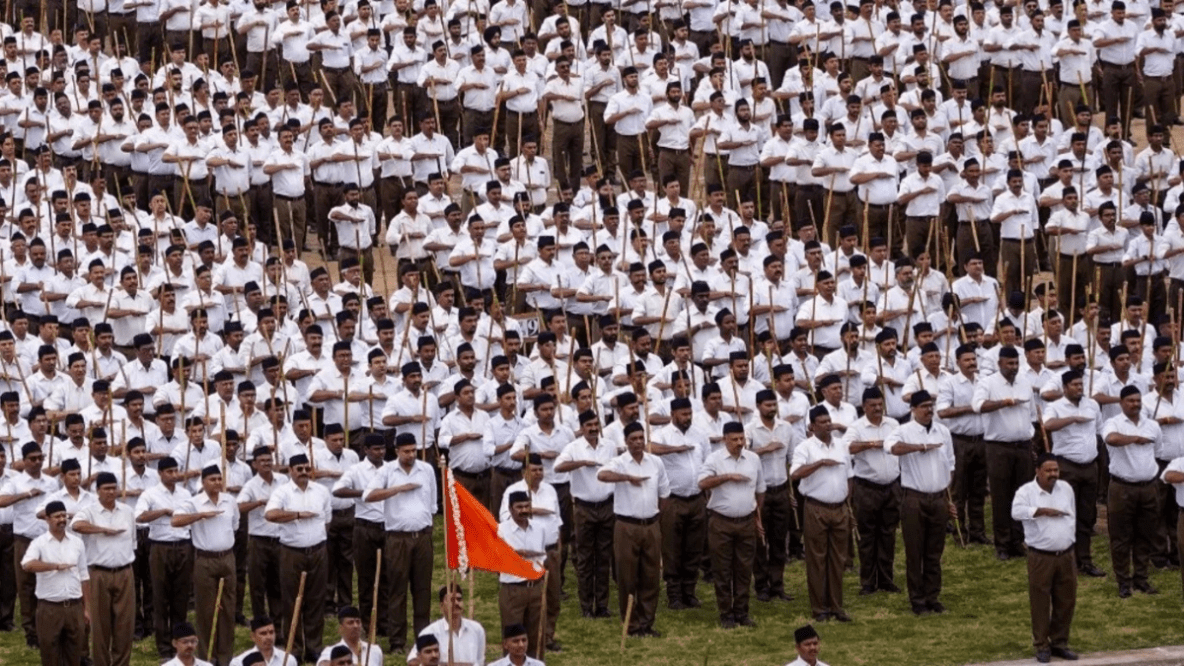
Hindutva, a political ideology distinct from Hinduism, seeks to transform India’s secular framework into a Hindu-first state. Its leading force, the Rashtriya Swayamsevak Sangh (RSS), has been linked to violence against minorities in India and has deep ties to the BJP. While RSS supporters claim it promotes Hindu culture and values, critics argue that it is built on Hindu supremacist ideals.
As the controversy unfolds, the UK government’s stance remains firm in keeping its counter-extremism focus on Islamist and far-right threats. However, the leaked report has reignited discussions on whether Hindutva-linked extremism deserves greater attention in British policy circles.
About Author




Leave a Reply