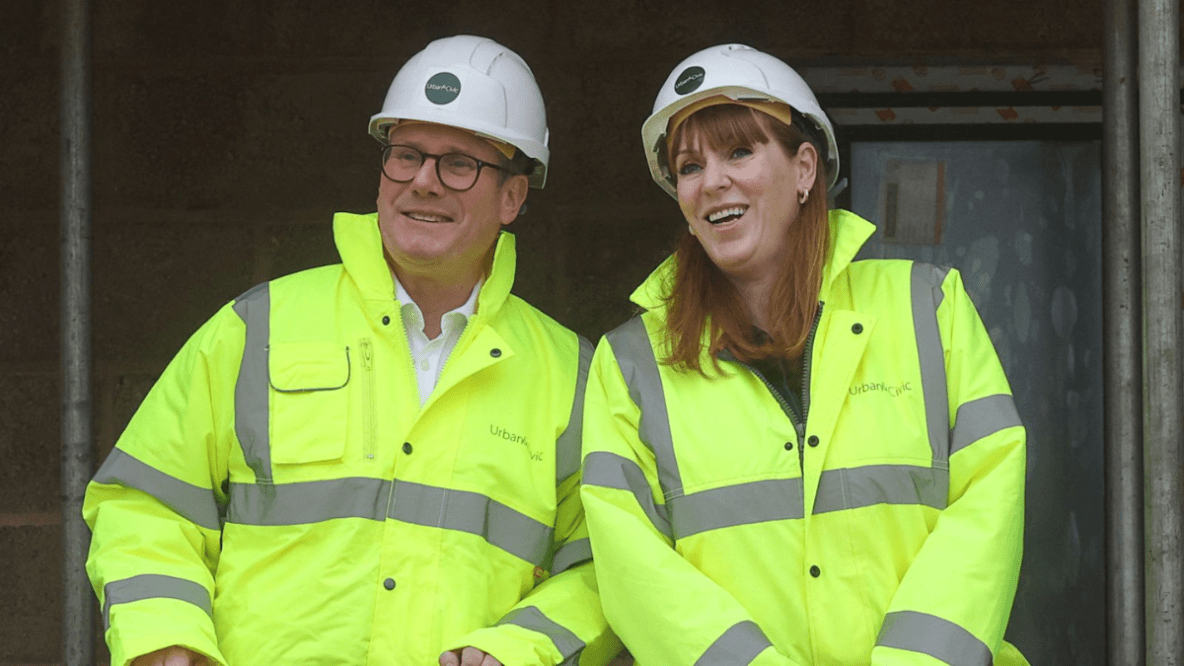
In a move set to transform Britain’s housing landscape, the government has announced an ambitious plan to build the next generation of new towns, marking the largest housebuilding drive since the post-war era. With more than 100 sites across England stepping forward for consideration, the initiative aims to create well-planned communities featuring affordable homes, schools, healthcare facilities, and public transport.
Prime Minister Keir Starmer, visiting a housing development today, laid out the government’s vision for tackling the housing crisis. “For so many families, homeownership is a distant dream. After a decade of decline in housebuilding, the impact is a disconnect between working hard and getting on,” said the PM.
Adding that the plan is about more than just bricks and mortar, Starmer emphasised over the security and stability that owning your own home brings. He said, “I know what this means for working people – the roof above our head was everything for our family growing up. We’ve already made progress in just seven months, unblocking 20,000 stuck homes.”
“We’re urgently using all levers available to build the homes we need so more families can get on the housing ladder. We’re sweeping aside the blockers to get houses built, no longer accepting no as the default answer, and paving the way for the next generation of new towns. As part of the largest housebuilding programme since the post-war era, our ambitious Plan for Change will transform the lives of working people, once again connecting the basic principle that if you work hard, you should get on,” the PM added.
With over 350 housing development sites stuck in the planning system, the government is accelerating efforts to unlock an estimated 700,000 homes. Around a quarter of these sites are already under review as part of the government’s ‘New Homes Accelerator’ initiative, which aims to fast-track projects stalled due to bureaucratic delays. The effort is further supported by major reforms in planning regulation, ensuring local councils and developers can push forward with housing projects at scale.
Deputy Prime Minister and Housing Secretary Angela Rayner underscored the urgency of the initiative, said, “Time and again we are seeing too many new homes stuck or stalled that not only act as a barrier to growth but also has real-world consequences for working people and families who see homeownership as nothing more than a distant dream.”
“While our vision for the next generation of new towns is setting the stage for a housebuilding revolution in the years to come, urgent action is needed now to build the homes and infrastructure that our local communities are crying out for. That’s why our New Homes Accelerator is working at pace to find solutions and remove blockages in the system, executing long-lasting solutions to get spades in the ground,” she added.
Further talking about the Plan for Change, Rayner mentioned that the next chapter of the plan is to “build 1.5 million new homes, deliver the biggest boost in social and affordable housing in a generation, and raise living standards for working people and families across the country.”
The plan also includes a commitment to overhaul outdated planning laws, cutting through red tape to facilitate large-scale housing development. To speed up approvals, the government is allocating £1 million to agencies like National Highways and Natural England, along with £2 million to enhance efficiency in the Building Safety Regulator. Additional funds are being directed towards local councils to increase planning capacity and accelerate brownfield regeneration, ensuring urban renewal remains a core component of the housing expansion.
Major funding injections include £30 million for brownfield transformation in Bradford, £20 million for small-scale urban redevelopment, and £1.5 million to support a 15,000-home regeneration project in Manchester’s Victoria North district. These investments align with the government’s commitment to prioritize brownfield development before considering grey or green belt expansions.
With £5 billion in housing investment this year, including an £800 million boost to the Affordable Homes Programme, the government is positioning itself for a housing revolution. The approach aims to not only deliver much-needed homes but also provide the critical infrastructure—schools, healthcare centers, and public transport—that growing communities require.
As Britain faces one of its worst housing crises in decades, the government’s Plan for Change seeks to reverse years of stagnation, offering working families the security of homeownership and the promise of thriving new communities.
About Author





Leave a Reply