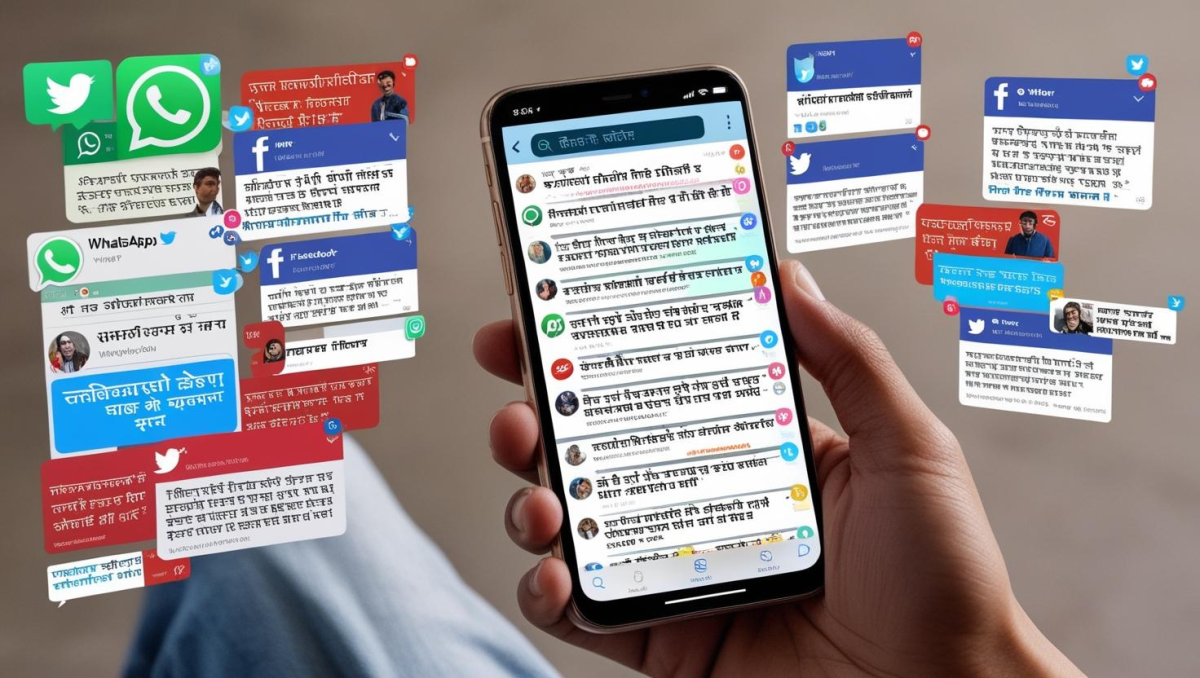
In the past decade, the whole scenario of news dissemination has changed. With the advancement of digital media and the availability of smartphones, news is just a click away. Algorithms cater to your taste of information instead of presentation of facts through your engagement on social media platforms like WhatsApp, Facebook and Instagram, as they have become ubiquitous in modern life, connecting billions across the globe.
However, this connectivity comes with a dark side: the rapid and widespread dissemination of misinformation and fake news. This phenomenon has had tangible and detrimental consequences, contributing to riots, social unrest, the spread of unhealthy practices, shaping of opinions and putting the young generation under stress.
India, with its vast and diverse population and a high percentage of social media users relying on these platforms for news, faces a significant challenge with the spread of disinformation. A report from the Reuters Institute indicates that 49% of Indians use social media as their primary news source. This reliance, coupled with the ease with which content can go viral, amplifies the impact of fake news, leading to social unrest, political instability, and health risks.
“Online news sources are preferred by 71% of Indians, with the main sources being YouTube, WhatsApp and Facebook,” according to the World Economic Forum’s 2024 Global Risk Report, which ranked India “highest for the risk of disinformation and misinformation.”
Access to widespread internet but limited digital literacy is the core reason behind growing concerns of misinformation in India. People have too much to consume but are unable to distinguish between fake news and accurate information. Also, traditional media struggles to keep pace with evolving technology, which again allows fake news to spread rampantly and social media platforms have become the primary source of news for many, which leads channels for disinformation, where viral content amplifies its impact. India’s vast size and diversity—spanning 28 states, 8 union territories, multiple ethnicities, religious and cultural practices, and over 19,500 dialects—create an environment where misinformation spreads rapidly, often interpreted differently across regions due to language barriers.
The country has witnessed several disinformation incidents, notably during the 2020 coronavirus outbreak, the Delhi riots, Citizenship Amendment Act debates, and false narratives targeting the Muslim minority. “The rapid spread of fake news in India, particularly through social media, continues to pose significant social, political, and health challenges,” noted the 2024 Global Risk Report.
As per a 2020 BBC report, the spread of fake news demonstrates how misinformation can exacerbate existing social tensions and lead to violence. A study by the Indian School of Business (ISB) and CyberPeace revealed that political fake news constitutes the largest share (46%) of misinformation in India, with social media platforms being the dominant source (77.4%). Twitter and Facebook were identified as the primary platforms for spreading fake news. This prevalence of politically motivated disinformation can significantly impact public discourse and contribute to social and political unrest.
India is not alone in this cycle of fake information. In London, the summer of 2024 witnessed riots partly fueled by false claims spread on social media following an attack in Southport. As reported by the UK Parliament Committees, an inquiry was launched to examine the role of social media algorithms and generative AI in spreading misleading and harmful content.
Further insights from Hyphen Online detail how unchecked social media platforms provided fertile ground for Islamophobic and anti-immigrant groups to organize and recruit. According to reports, between 30 July and 7 August 2024, 29 anti-immigration demonstrations and riots erupted across 27 UK towns and cities, with violent attacks on mosques and asylum seeker accommodations. Sparked by misinformation falsely identifying a Southport stabbing suspect as an asylum seeker, the unrest led to 1,280 arrests and 796 charges by the end of August, according to the National Police Chiefs’ Council (NPCC). The government fast-tracked court cases, sentenced over 200 people by 8 August. Reports found that far-right groups, including Patriotic Alternative and former EDL members, fueled the riots through social media. Police identified misinformation as a key driver of the violence, marking the UK’s most severe unrest since the 2011 riots.
False narratives, amplified by pseudo-news accounts and influencers, quickly gained traction, which shows how easily public perception can be manipulated in the digital age. Platforms like X (formerly Twitter) and Telegram played a central role in the flow of disinformation, raising concerns about the moderation policies and the amplification of extremist views.
Besides fueling social hatred and violence, the constant bombardment of unverified information on social media platforms significantly impacts how individuals form opinions in today’s world, followed by stress, tension and anxiety. These days, when every other reel or influencer is either advising on health, diet, and religious practices, it is tough not to completely ignore these contents. While there are no specific studies that link misinformation to unhealthy practices among youth directly, looking at the impact of fake news, it is plausible that the consumption of false health information online could contribute to such practices. For instance, misinformation about diet, exercise, or substance use could negatively influence young people’s behavior.
This is particularly concerning for younger generations who may lack the critical thinking skills to discern credible information from falsehoods. A UNICEF poll in Bangladesh indicated that “too much fake news and misinformation” is the leading cause of stress for youth on social media, highlighting the psychological impact of this digital environment.
The 2025 UNICEF poll of nearly 29,000 children and young people in Bangladesh revealed that misinformation is the biggest source of stress on social media, with two-thirds citing “too much fake news” as a major concern. “Bullying and negative comments were also significant stressors, particularly for girls, while harmful content was another key issue,” read the report.
The poll, conducted via UNICEF’s U-Report platform, also explored opinions on social media regulations. “While 23% feared rules might limit free expression, 52% supported them to prevent bullying and hate speech. Alarmingly, 79% believed relaxing regulations would harm vulnerable groups, particularly ethnic and religious minorities (30%), children and youth (26%), and women and girls (23%),” noted the report.
The report further found that over half of the respondents noticed shifts in online content, with 17% feeling less safe. UNICEF stressed the shared responsibility of policymakers, regulators, tech companies, educators, and families in ensuring children access accurate information and navigate digital spaces safely.
It is important to note that the impact of misinformation on youth is a complex issue and can vary based on individual vulnerabilities, media literacy levels, and the specific social and cultural contexts of any country.
The speed and reach of these social media platforms reflect that false narratives can spread rapidly, influencing public perception before fact-checking mechanisms can intervene. False news and disinformation have the echo chamber effect, where individuals are primarily exposed to information that confirms their existing beliefs, further exacerbating the problem. Social media algorithms can inadvertently contribute to this by showing users content they are likely to engage with, potentially reinforcing biases and making them less receptive to diverse perspectives or factual corrections.
The spread of misinformation and fake news through social media platforms poses a significant threat to social cohesion and individual well-being. The incidents of violence and unrest highlight the real-world consequences of online falsehoods and potentially influencing unhealthy practices and shape biased opinions. Addressing this challenge requires a multi-faceted approach involving media literacy education, robust fact-checking initiatives, and greater responsibility from social media platforms in moderating content and curbing the spread of harmful disinformation. The future of informed public discourse and community harmony depends on our collective ability to navigate the complexities of the digital information landscape.
About Author




Leave a Reply