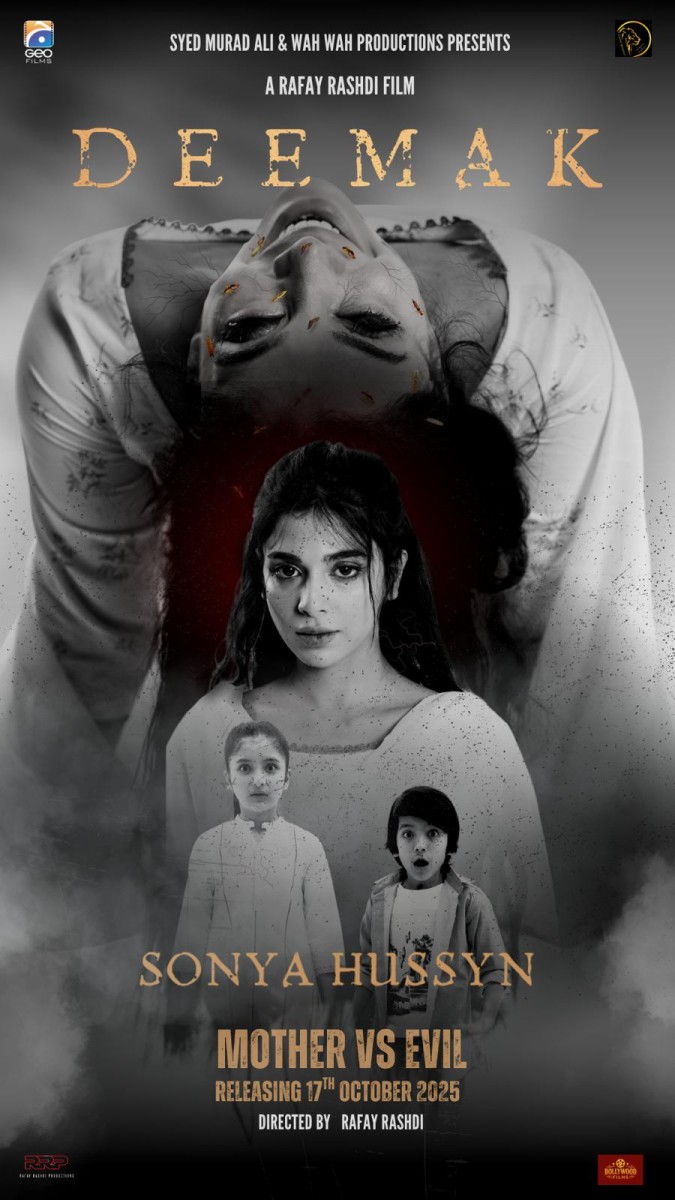
In Deemak, fear doesn’t come from the shadows — it comes from what we inherit. Pakistan’s record-breaking horror sensation, which captivated audiences with its chilling portrayal of jinn infestation and generational trauma, is not just a story about hauntings; it’s a story about women. Beneath its supernatural veneer lies an intimate exploration of motherhood, grief, and resilience — a theme that has made Deemak one of the most emotionally resonant South Asian horror films in years.
As the film continues its record-breaking run at home and prepares for a global release this week, audiences and critics alike are discovering that Deemak’s true power lies in the women who carry its emotional weight — and in how their pain, silence, and strength shape every moment of terror.
At the centre of Deemak’s haunting is Sonya Hussaiyn, who plays a woman grappling with the loss of her identity amid the unraveling of her family. Opposite her stands Samina Peerzada, one of Pakistan’s most revered actors, portraying a matriarch haunted by the consequences of her choices. Their relationship anchors the film — two generations of women bound by love, guilt, and secrets that refuse to stay buried.
Unlike traditional horror, where women often exist as symbols of vulnerability, Deemak reframes them as vessels of endurance. The film’s title — meaning “termite” — becomes a metaphor not just for decay, but for survival in silence. The women of Deemak don’t scream their fear; they internalize it, transforming quiet suffering into quiet strength.
n Deemak, the supernatural is inseparable from the psychological. The jinn, a recurring figure in Islamic and South Asian folklore, serves as both literal and symbolic — a manifestation of trauma passed down through generations. The film’s screenplay layers this folklore with the everyday anxieties of womanhood: domestic isolation, motherhood, and emotional invisibility.
As Deemak expands beyond its borders, the women at its heart — both in front of and behind the camera — are redefining what Pakistani horror can be: not just frightening, but profoundly human.
About Author



Leave a Reply